
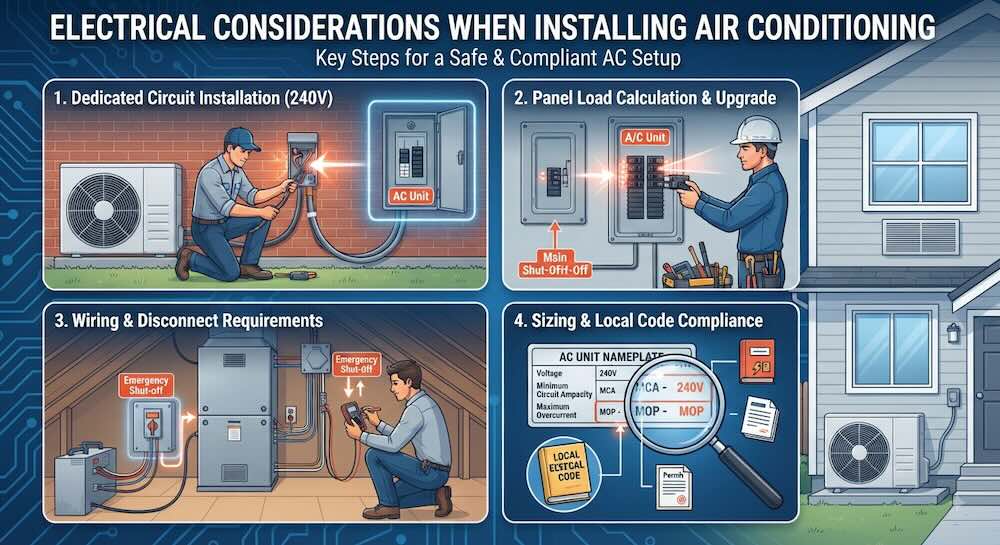
Installing air conditioning is a great way to keep a home or workplace comfortable throughout the year, but there is more to a successful installation than simply choosing the right unit and finding a suitable position on the wall. From the electrical supply to the location of cables, isolators and controls, the electrical side of an air conditioning installation needs careful consideration.
Does Air Conditioning Need Its Own Electrical Circuit?
In many installations, an air conditioning system will require a dedicated electrical supply. The exact requirements depend on the size and type of system being installed, but an existing general-purpose socket circuit is not necessarily suitable.
A qualified electrician can assess the property’s consumer unit, existing circuits and available capacity before installation work begins. This helps ensure that the air conditioning system has an appropriate and safe electrical supply.
Where a new circuit is required, this may involve installing appropriately sized cabling from the consumer unit to the air conditioning equipment, along with suitable protective devices.
Electrical Isolators for Air Conditioning
Air conditioning systems generally require a local means of isolation so that the equipment can be safely disconnected from the electrical supply when required.
The isolator needs to be suitably positioned and accessible, while the installation should take account of the manufacturer’s requirements and the particular layout of the property.
This is one reason why it makes sense for the electrical work to be considered at the same time as the air conditioning installation rather than treating the two as completely separate jobs.
Planning Cable Routes
Cable routing is another important consideration. Nobody wants an air conditioning installation that leaves unnecessary cables running across walls or around rooms.
During electrical work, cable routes can be planned to keep wiring as neat and discreet as possible. For new-build properties, extensions or rooms being renovated, it may even be possible to conceal much of the cabling within walls, floors or other suitable areas.
For existing properties, the electrician needs to consider the construction of the building and find a practical route that minimises disruption while still meeting the requirements of the installation.
Checking the Consumer Unit
Before adding a new electrical load to a property, it is sensible to check the condition and capacity of the existing consumer unit.
Older consumer units, inadequate protection or a lack of available ways for additional circuits can all affect how straightforward an installation will be. An electrician can identify any issues before work starts and advise on what may be required.
This can be particularly important in older properties where the electrical installation has been extended or modified several times over the years.
Air Conditioning and Electrical Work Go Hand in Hand
Although air conditioning is primarily associated with heating and cooling, the electrical installation is a fundamental part of the system. A properly planned electrical supply can help ensure the equipment operates safely and reliably.
If you’re considering installing air conditioning at home or in a business, it is worth looking at the electrical requirements before choosing the system. Professional air conditioning installers can advise on the equipment and installation requirements, while a qualified electrician can ensure the electrical side is properly planned.
For more information about air conditioning systems and installation, visit Air Conditioning Blackpool.
Getting Electrical Work Ready for Air Conditioning
If you’re having air conditioning installed as part of a renovation, extension or new room, it can be particularly beneficial to arrange the electrical work at the right stage of the project. Planning the supply and cable routes early can reduce unnecessary chasing, drilling and remedial work later.
Whether you are installing a single air conditioning unit or a larger system covering several rooms, the electrical requirements should form part of the overall installation plan from the beginning.
A properly designed electrical supply isn’t just about getting the system working — it is about making sure the installation is safe, practical and suitable for the property.